A camera that could see the problem but not the proof
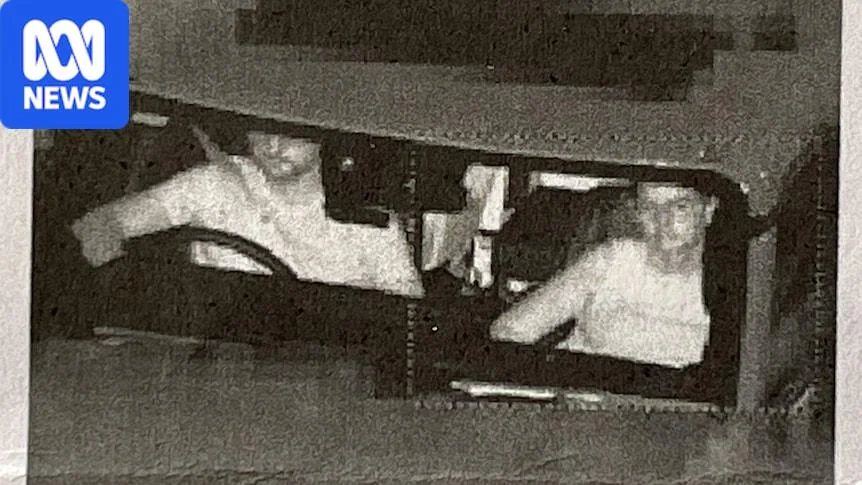
Western Australia's AI powered road safety cameras, introduced in October 2025, have issued 81,412 seatbelt related infringements. Since then, roughly 7 per cent of contested fines, about 5,700 out of that total, have been overturned on review, withdrawing more than $1 million worth of penalties within six months of the system going live.
The core issue is not that the cameras got the seatbelt detection wrong. It is that detecting a seatbelt problem and proving a driver was legally responsible for it turned out to be two entirely different things. WA Police Commissioner Col Blanch put the practical reality plainly, "We don't want to waste the courts' time on a matter we aren't going to win anyway." Formal dismissal letters sent to drivers stated simply that "following the assessment of the available evidence, the Western Australian Police Force has decided not to proceed with prosecution."
What actually went wrong, in plain terms
The camera system captures a moment, a seatbelt visibly out of position, a child or passenger not correctly buckled. What it cannot capture is intent or awareness, whether the driver actually knew, at that instant, that a seatbelt had slipped or a passenger had shifted position while they were focused on the road ahead.
A prosecutor's message on one contested case made the legal standard explicit, "In no circumstances do they want drivers looking around and checking their kids, partners or their friends are strapped in." That is a genuinely difficult standard for an automated system to meet. It requires proving a driver's state of mind at a specific moment, not just confirming what a camera image shows. Complaints piled up specifically around this gap, drivers fined $550 plus four demerit points over a grandchild's seatbelt slipping, or a passenger's momentary movement they had no realistic way to monitor while driving safely.
The result the AI system was actually built to achieve, buried under the controversy
It is worth being fair to what the technology has genuinely done well, even while the enforcement mechanism around it clearly needed fixing. Seatbelt related infractions fell 76 per cent between September 2025 and August 2026 since the cameras were introduced. More significantly, seatbelt non-compliance as a factor in motor vehicle deaths dropped from around 20 per cent to 13.8 per cent over the same broad period.
That is a genuine public safety outcome, and it is the reason this is a more nuanced story than "AI enforcement failed." The detection technology appears to have changed driver behaviour at scale. The problem sitting underneath that success was never really about whether the AI could see seatbelt violations. It was about whether the legal and administrative process built around that detection could fairly assign responsibility for what it saw.
Why so few cases actually reach court
Only about 5 per cent of contested seatbelt matters reach police assessment stage, and just 0.1 to 0.2 per cent actually go to trial. That is a telling number in its own right. It suggests the system worked, in effect, as an automated first pass generating a very large volume of fines, with the genuine legal filtering happening only when a driver pushed back hard enough to force a proper review.
That is a meaningful design lesson for any automated enforcement or decision system, not just traffic cameras. If the appeals or review process is where most of the actual legal correctness gets established, and most people either do not know they can appeal or find it too costly or time consuming to try, the system is quietly relying on a small minority of contested cases to catch errors that likely affect a much larger share of the total.
What this means for any business deploying automated decision systems
Detection and proof of responsibility are not the same problem, and conflating them is where these systems get into trouble. An AI system that reliably detects an event is not automatically equipped to fairly determine who is accountable for it. That gap is exactly where WA's camera system ran into real world trouble, and it is a genuinely useful checklist item for any business using AI to flag, fine, reject or penalise customer behaviour automatically.
A high rate of overturned decisions on appeal is a signal worth acting on early, not a rounding error to absorb. A 7 per cent reversal rate sounds small until it is translated into $1 million in withdrawn fines and thousands of individually frustrated people. If your business runs any automated decision system, track the overturn rate specifically, and treat a rising number as an early warning rather than background noise.
Make it genuinely easy to contest an automated decision, not technically possible but practically difficult. The fact that only 5 per cent of matters here reached a genuine review stage, while a much larger share were later found not to hold up, suggests plenty of legitimate objections likely went unraised simply because the process to raise them was not accessible enough.
The honest read
This is not simply a story about AI getting something wrong. The underlying detection technology appears to have genuinely improved seatbelt compliance and reduced deaths, a real result worth acknowledging. The actual failure was a narrower, more specific one, building an enforcement pipeline on top of accurate detection without building an equally robust way to fairly establish who was responsible for what the camera saw. That distinction is the one worth remembering well beyond traffic cameras.
Sources
TECHMOOSE AI
Ready to put AI to work in your business?
TechMoose AI builds voice agents and chatbots that answer calls, take bookings and handle support, live in minutes, not months.
Try TechMoose AI