The fall that nobody in the room could unsee
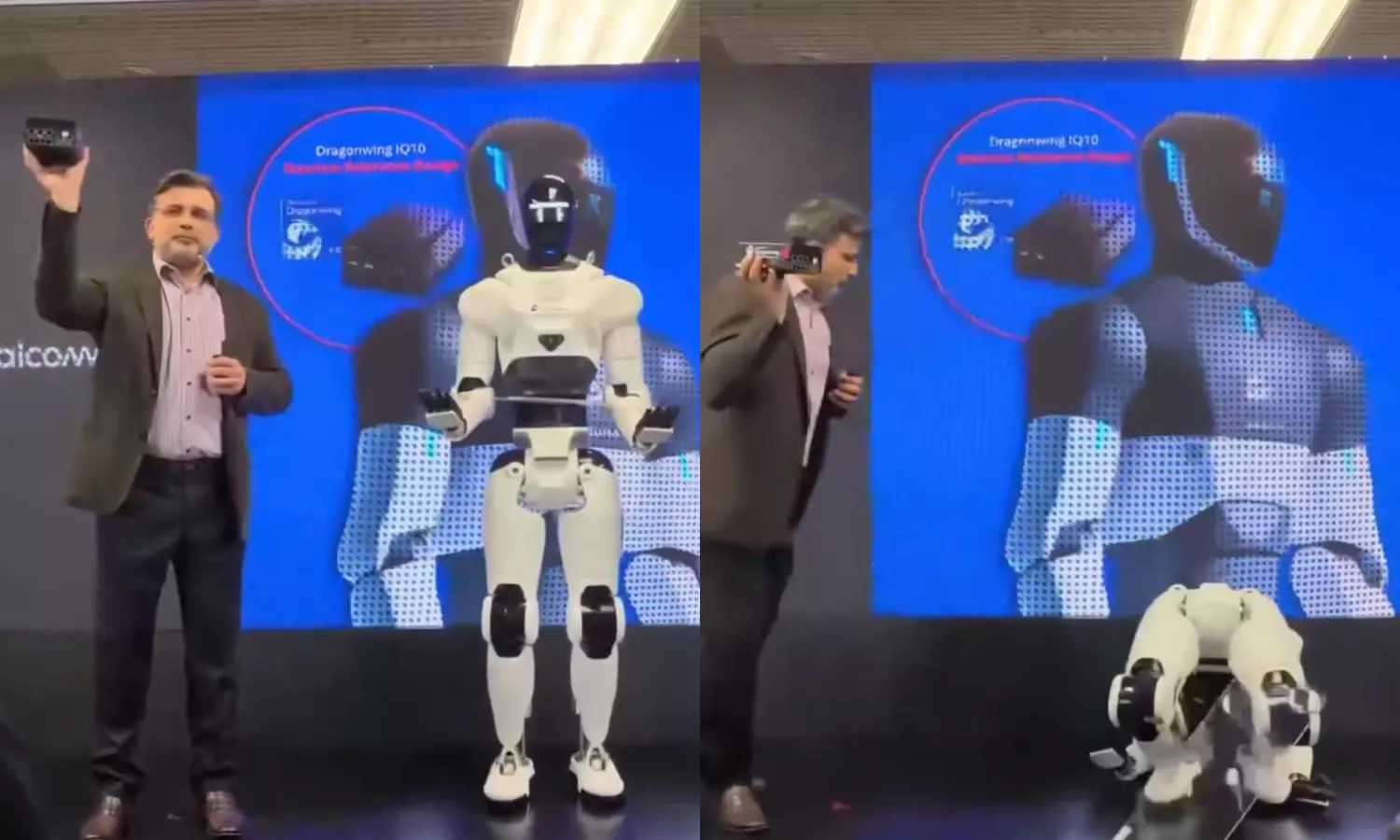
On 31 July, at Computex 2026 in Taiwan, a humanoid robot powered by Qualcomm's Dragonwing IQ10 chip walked onto the stage alongside a human presenter, part of a live keynote demonstration. It did not get far. The robot suddenly pitched forward and hit the floor face first, hard enough to produce an audible impact the whole room heard.
For one brief, genuinely funny moment, the robot raised a fist from the ground, whether that was a defiant gesture or simply an uncontrolled mechanical twitch depends entirely on how generous you want to be toward robots. It could not stand back up on its own. Stage handlers rushed out, threw a cloth over it, and carried it off, which is somehow the most human response possible to watching your keynote robot faceplant in front of an audience.
Qualcomm's explanation is the actual best part
Most companies would want a moment like this to quietly disappear. Qualcomm instead put out a genuinely detailed explanation, and it is worth reading closely because it doubles as an accidental comedy routine delivered in the most serious corporate tone possible.
According to Qualcomm, the robot "executed its built-in safe-collapse sequence, lowering itself to its knees to help protect people and its surroundings." In other words, the fall was not necessarily a malfunction in the sense of something breaking, it was reportedly the robot's own safety system choosing to go down in a controlled way once something else, a communication glitch, according to Qualcomm, went wrong upstream. The company added that "safety systems functioned as designed," and framed the whole event as producing "valuable real-world data to improve system reliability and accelerate development of safer, more resilient robots."
Why the explanation is actually more interesting than the fall
It would be easy to read Qualcomm's statement as pure damage control, and there is certainly some of that in it. But there is a genuinely useful idea buried underneath the corporate phrasing. A robot designed to fail by deliberately collapsing into a safe, controlled position, rather than freezing rigid or flailing unpredictably, is a real and sensible engineering choice for machines meant to eventually operate around actual people.
The problem is entirely one of optics rather than engineering. "Graceful failure mode" is a genuinely sound safety principle. It is also, when it happens live on a keynote stage in front of a room full of press and cameras, indistinguishable from a robot simply falling over, and the internet was never going to read it any other way.
The honest read
This is a story that is funny first, and only faintly instructive second, which is exactly what a good funny AI story should be. A humanoid robot fell on its face during a live keynote, got covered with a cloth and carried away like it had fainted at a wedding, and the company's official response was, in effect, "it meant to do that." Whether or not you believe the safe-collapse explanation, and there is no strong reason not to, it does not change the fact that this is one of the more delightfully human moments a robot has ever had on a public stage.
Sources
TECHMOOSE AI
Ready to put AI to work in your business?
TechMoose AI builds voice agents and chatbots that answer calls, take bookings and handle support, live in minutes, not months.
Try TechMoose AI