The number that puts this in perspective
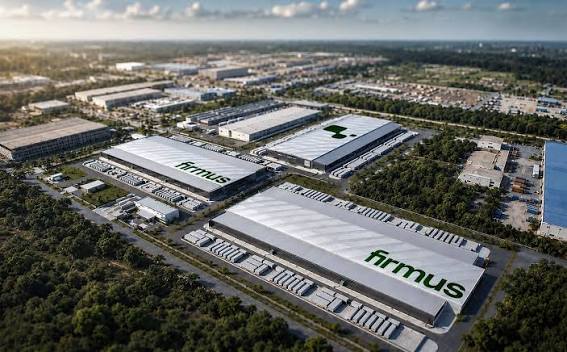
Firmus Technologies has requested a long term contract for 450 megawatts of power from Hydro Tasmania, to support three AI data centres across the state, one already operating in Launceston, one approved at Long Reach in Bell Bay, and one with a pending application at Wesley Vale. Firmus currently holds a three year contract for 104 MW to run the Launceston facility alone.
The scale of the new request is the detail worth sitting with. 450 MW represents roughly 30 per cent of Tasmania's current total energy consumption. If approved, Firmus would become the state's single largest power user, overtaking Bell Bay Aluminium, which currently draws 355 MW. One company, requesting power equivalent to nearly a third of an entire state's grid, for AI data centres.
What Hydro Tasmania is actually weighing up
Hydro Tasmania has been direct about what the decision actually involves, and it is more complicated than simply agreeing to a large power contract. In its own words, "The key question we will seek to answer is whether 450 MW of new energy can be provided and what are the commercial terms that would deliver value to Tasmania while managing any risks."
That framing matters. Meeting a request this size is not a matter of Hydro Tasmania simply allocating existing hydro capacity, it would require genuinely new generation capacity, most likely new wind and solar developments built by third parties rather than Hydro Tasmania itself. Firmus has committed to building two megawatts of renewable generation for every one megawatt it consumes, a ratio explicitly designed to answer the obvious question about where all this extra power is meant to come from. Hydro Tasmania says it will assess Firmus's financial stability, the credibility of its renewable generation timeline, the commercial value to the state, and how the arrangement fits alongside the state's existing water storage responsibilities before making a decision, expected by the end of 2026.
Why this is not happening in isolation
This request lands in the middle of active public scrutiny, not a quiet commercial negotiation. Tasmania is currently running a parliamentary inquiry into AI data centres, with public submissions closing 21 September. The inquiry was specifically pushed by the Greens, who have separately tabled a petition calling for a moratorium on further AI data centre approvals in the state.
That timing is not incidental. It means Hydro Tasmania's decision on the Firmus request will land in the same period as, or shortly after, a formal parliamentary process examining exactly the questions this deal raises, whether AI data centres deliver genuine value to Tasmanians, and what the actual trade offs look like once the scale involved is properly understood.
The genuine trade off underneath the headline number
It would be too simple to read this purely as "a big company wants too much power." Firmus's build commitment, two megawatts of new renewable generation for every one it consumes, means the request is not purely extractive on paper. If delivered as promised, Tasmania would end up with meaningfully more renewable generation capacity built specifically to support this deal than existed before it.
The genuine, open question is whether that commitment holds up in practice, on the timeline promised, and whether the commercial terms Hydro Tasmania negotiates actually translate that build commitment into value that flows back to Tasmanian energy users and the state more broadly, rather than the new capacity being built, used, and effectively ring fenced for one customer's benefit alone.
What this means beyond Tasmania
AI infrastructure's energy footprint is now large enough to reshape a state's power planning, not just a company's own bill. A single data centre operator requesting power equal to 30 per cent of an entire state's consumption is a genuinely new scale of demand for regional energy grids to absorb, and Tasmania is unlikely to be the last place this exact conversation plays out.
A build commitment attached to a power request is a meaningful accountability mechanism, worth watching for in any similar deal. Firmus's two to one renewable build ratio is a specific, checkable commitment, not a vague promise. Whether it becomes an industry norm for large AI infrastructure deals, or stays a one off negotiating position specific to this case, is worth tracking closely.
Public scrutiny arriving alongside a major infrastructure decision, rather than after it, is a healthier pattern than the alternative. Tasmania's parliamentary inquiry running in parallel with this specific negotiation gives the public and policymakers a genuine window to weigh in before the deal is finalised, rather than reacting after the fact.
The honest read
This is a genuinely large ask, large enough that the number alone tells most of the story, and Hydro Tasmania has been unusually direct about the fact that meeting it is not straightforward. The renewable build commitment attached to the request is a real, specific offer rather than empty reassurance, but whether it holds up as promised is exactly the kind of detail a decision expected by year's end will need to get right, under real public scrutiny rather than behind closed doors.
Sources
TECHMOOSE AI
Ready to put AI to work in your business?
TechMoose AI builds voice agents and chatbots that answer calls, take bookings and handle support, live in minutes, not months.
Try TechMoose AI