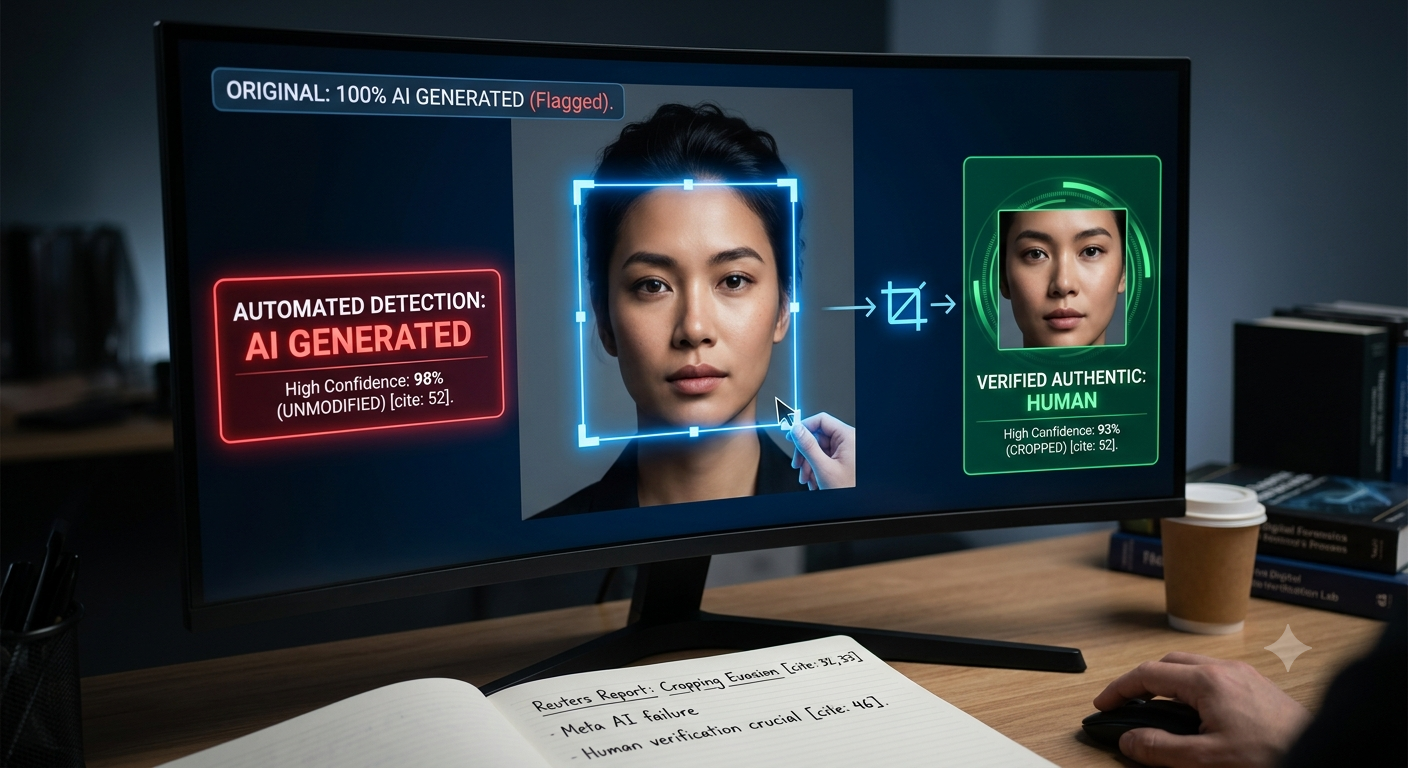
A recent Reuters report highlights an important limitation in today’s AI detection technology. Meta’s AI image detection system reportedly failed to identify some of its own AI-generated images after they had been cropped. While cropping may seem like a minor edit, the finding shows that even advanced AI detection tools can struggle once an image has been modified. As AI-generated content becomes more common across social media, news platforms and online advertising, this raises important questions about how much trust people should place in automated detection systems.
For everyday users, the biggest takeaway is that an “AI detected” or “Not AI generated” label should not be treated as definitive proof that an image is fake or authentic. Detection tools are improving rapidly, but they are not perfect. Simple edits such as cropping, resizing or other modifications may reduce a detector’s ability to accurately identify AI-generated content. This means that misleading or manipulated images could still circulate online without being flagged.
The issue is particularly relevant as AI-generated images are increasingly used in scams, misinformation campaigns and fake social media posts. Criminals and bad actors often make small edits to images before sharing them, making it more difficult for automated systems to recognise that the content was created using AI. For parents, educators, businesses and anyone who regularly consumes or shares online content, relying solely on an AI detection label could create a false sense of confidence.
Businesses should also take notice. Organisations frequently reuse customer photos, supplier images and marketing assets across websites and social media channels. Before republishing important visual content, businesses should implement basic verification processes rather than depending on a single AI detection tool. Cross-checking images with trusted sources, reviewing the original context and using multiple verification methods can significantly reduce the risk of spreading misleading content.
As AI technology continues to evolve, detection systems will also improve, but this research demonstrates that they are not yet foolproof. The safest approach is to combine AI tools with human judgement and critical thinking. When an image appears unusual, emotionally manipulative or too sensational to be true, taking a few extra minutes to verify its origin through multiple reputable sources is far more reliable than trusting a single automated label. AI detection tools should be viewed as helpful assistants rather than final authorities, and responsible digital literacy remains one of the best defences against misinformation and online scams.
TECHMOOSE AI
Ready to put AI to work in your business?
TechMoose AI builds voice agents and chatbots that answer calls, take bookings and handle support, live in minutes, not months.
Try TechMoose AI