An FAQ page that said more than it meant to
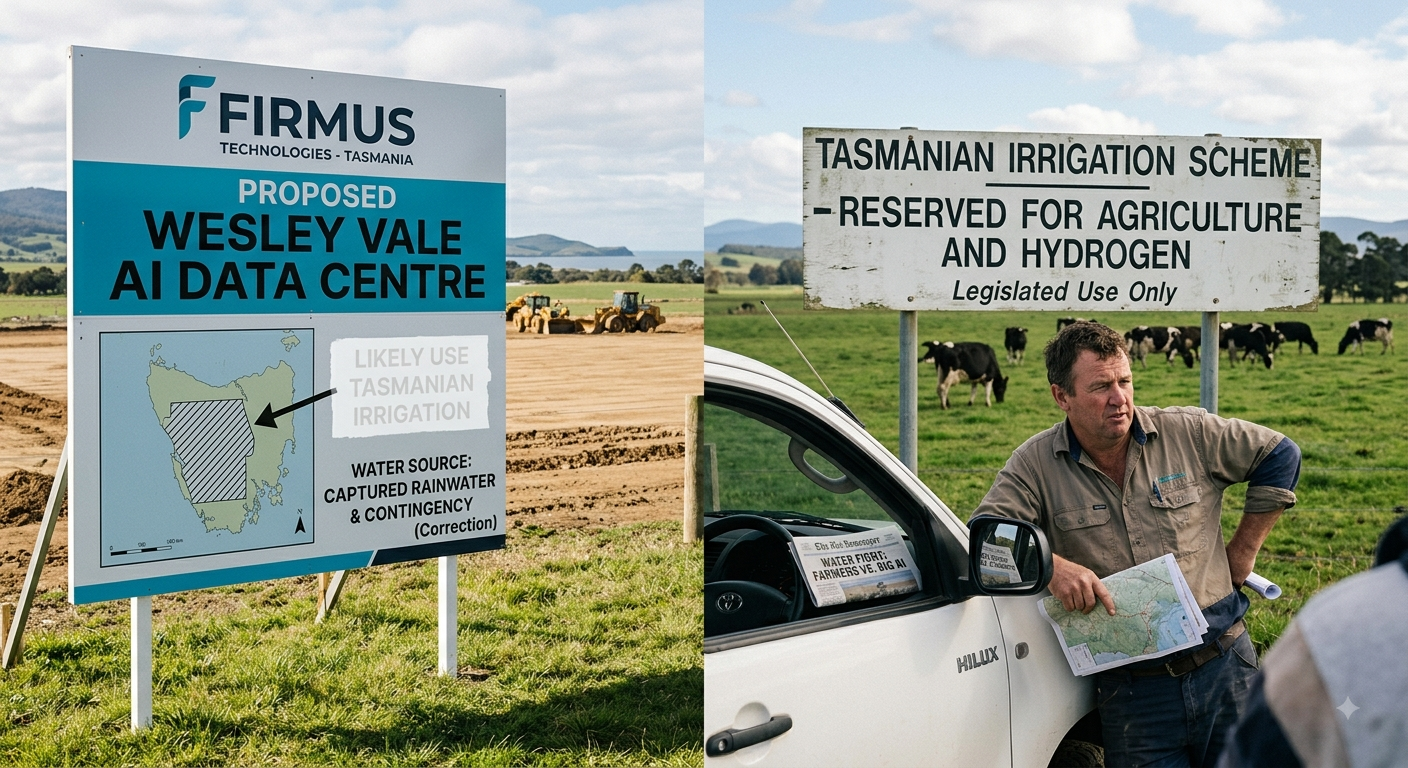
Firmus Technologies, the Singapore backed company behind a run of proposed AI data centres across Tasmania, published a line on its Wesley Vale project FAQ page stating the facility would "likely use Tasmanian Irrigation because TasWater does not service the area."
The line did not stay up long. After questions from the ABC, Firmus removed it and issued a statement: "We have updated our Wesley Vale FAQs on our website to correct some internal information that was inadvertently published." The company says it remains "focused on providing the Tasmanian community with clear and accurate information."
Here is why a single deleted sentence became a genuine story rather than a footnote. Tasmanian Irrigation is a state owned scheme, and it was built for one purpose: supplying water to Tasmanian farmers. Its own legislative framework covers agriculture and hydrogen production. AI data centre cooling is not on that list. Tasmanian Irrigation's response was blunt: "Tasmanian Irrigation has given no undertaking to Firmus," adding that any application from outside agriculture "would require consideration by the Tasmanian government."
Innovation Minister Felix Ellis said the government had "not received a proposal" and would work through one in the usual way if it arrived, while confirming a draft statement of expectations for data centres is due within 100 days.
Firmus's defence
Firmus has pushed back on the framing since the FAQ was pulled, saying most cooling water at Wesley Vale would actually come from captured rainwater, with any additional source needed only for contingency and resilience during dry periods. The company also argues its water requirements are relatively low compared with conventional data centres, a point that is plausible given how AI facilities are typically designed to minimise water use, but one that has not been independently verified in this case.
That is a real distinction. A backup contingency plan is different to a primary water source. But it does not erase the more basic issue, a document not meant for public view named a farming water scheme as a likely supplier for an AI project, before anyone in government or agriculture had agreed to that.
Why this is bigger than one company's FAQ mistake
Wesley Vale is one piece of a larger picture. Firmus has proposed three Tasmanian facilities, at St Leonards in Launceston, Bell Bay, and Wesley Vale, which together could draw more than 400 megawatts of electricity, potentially making Firmus the largest single power user in the state. A parliamentary petition calling for a moratorium on new AI data centres collected more than 4,200 signatures in under a week, and the Greens are pushing for a formal parliamentary inquiry into energy and water oversight.
Set against that backdrop, the Wesley Vale note reads less like an isolated slip and more like a preview of the actual argument to come: when AI infrastructure needs the same water, land and power that agriculture and existing communities already depend on, who gets priority, and who decides?
The question this raises for every state, not just Tasmania
Tasmania is not unique in facing this. Every AI data centre proposal, anywhere, eventually runs into the same three finite things, land, water and electricity, in a specific location where other industries and communities already have claims on all three.
What makes this incident notable is not that a company wanted a contingency water source. It is that the reveal was accidental, not offered upfront. Community trust in large infrastructure projects tends to depend less on what a company plans to do and more on whether it volunteers that information before someone else finds it. Firmus was not caught doing something necessarily improper. It was caught not saying it out loud first.
What this means for Australian businesses watching the AI infrastructure boom
You do not need to operate a data centre to learn something from this.
Communities are watching resource claims closely now, not just emissions. The AI infrastructure conversation has moved past "will this create jobs" to "what will this actually consume, and from where." Any business publicly associated with AI, even one three steps removed from the data centre itself, benefits from being able to answer that question honestly.
Transparency has to come before the leak, not after it. Firmus's real error was not necessarily the water plan. It was letting the plan surface by accident instead of explaining it directly. That lesson applies to any business making claims about AI, sustainability or resource use. Say the real plan first, in your own words, before someone else has to go looking for it.
Local approval is not a formality anymore. A 4,200 signature petition in under a week, and a state government promising a formal statement of expectations within 100 days, show that community and political pressure on AI infrastructure can move fast. Assuming quiet local acceptance is no longer a safe bet anywhere in Australia.
Sources
- Wesley Vale AI factory faces questions over proposed irrigation water use, Pulse Tasmania
- Firmus Technologies accidentally reveals it wanted to use Tasmanian Irrigation water for AI data centre, Tasmanian Country
- Tasmanian AI data centre petition draws 4,200 signatures in a week, Pulse Tasmania
- Tech company supports further consultation on controversial AI data centre, The Examiner
TECHMOOSE AI
Ready to put AI to work in your business?
TechMoose AI builds voice agents and chatbots that answer calls, take bookings and handle support, live in minutes, not months.
Try TechMoose AI